

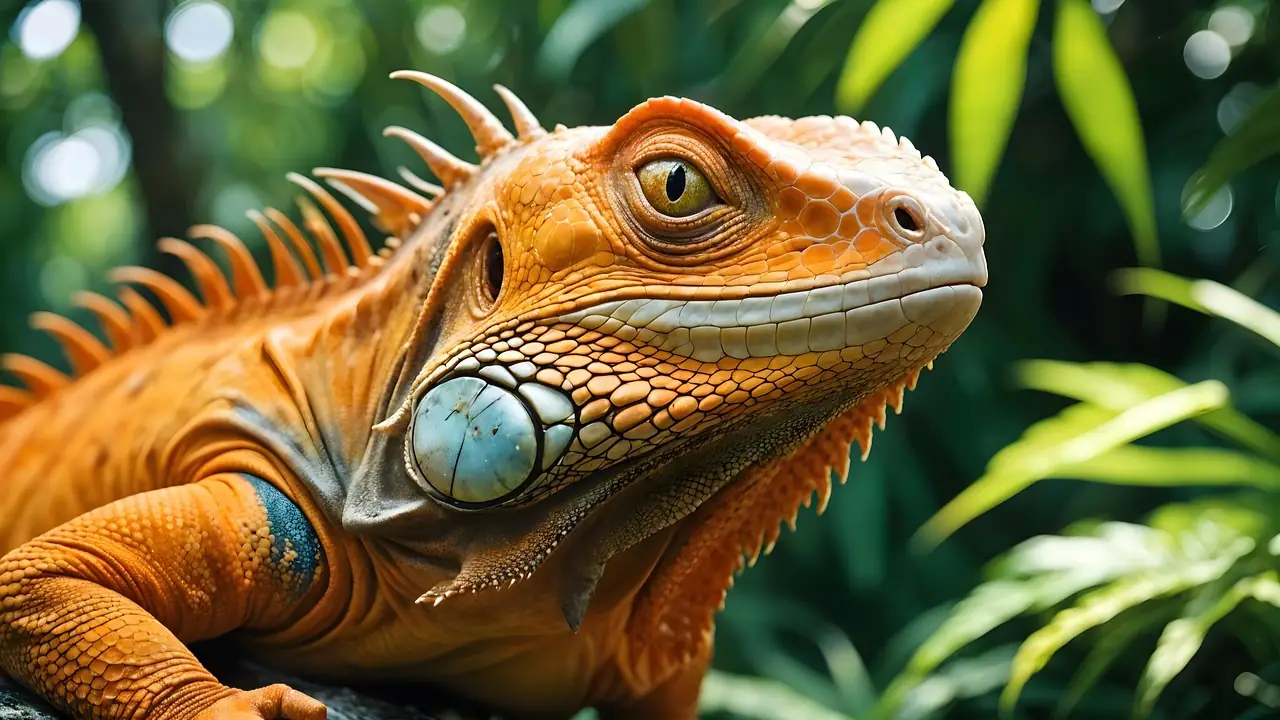
Have you ever looked at a green iguana and wondered why it suddenly turned bright orange? It’s fascinating, almost like watching a reptile put on a flashy new outfit. But there’s more to this color change than meets the eye. Green iguanas don’t just shift colors for fun—there are deep biological and environmental reasons behind it.
What Are Green Iguanas?
Green iguanas (Iguana iguana) are large arboreal lizards found mainly in Central and South America, as well as parts of the Caribbean. They’re known for their vibrant green scales, long tails, and dinosaur-like appearance. These reptiles are semi-aquatic and often spotted basking in the sun near rivers or forest edges.
Normal Coloration of Green Iguanas
Despite their name, green iguanas aren’t always purely green. They can appear in different shades—bright lime, olive, or even bluish tones. Younger iguanas usually display more vivid green, while adults often darken with age. Their natural coloration helps them blend with foliage, making them less visible to predators.
The Mystery of Turning Orange
At some point in their life, especially during maturity, iguanas start developing orange or rust-colored skin. But why? Is it illness, stress, or a natural process? The truth is, in most cases, this vibrant orange hue is completely normal and even a sign of good health.
Seasonal Color Change
The most common reason for a green iguana turning orange is breeding season. During this time, male iguanas undergo hormonal changes that trigger a shift in coloration. Just like how a peacock fans its feathers, a male iguana shows off its orange hue to stand out.
Male Iguanas and Dominance
For male iguanas, turning orange is like wearing a bold suit—it screams confidence and dominance. This flashy display signals to other males to back off and at the same time, attracts females. The brighter the orange, the stronger and more dominant the iguana appears.
Sexual Maturity and Reproduction
Color change usually begins once a male reaches sexual maturity, often around 2–3 years old. Females looking for a mate interpret the orange coloration as a sign of health and fertility. In short, an orange iguana is nature’s way of advertising: “I’m ready to reproduce.”
Communication Through Color
Iguanas don’t have spoken language like humans, but their skin tells stories. Orange coloration often comes with head bobbing, dewlap extension (that flap under the chin), and tail flicking. These signals establish dominance, warn rivals, or woo potential mates.
Environmental Influences
Temperature plays a huge role in iguana coloration. In cooler weather, their skin can appear darker to absorb more heat. During sunny days, they may lighten up. Exposure to UV light also enhances pigmentation, making orange tones more vivid.
Stress and Health-Related Changes
While orange coloration is usually natural, sudden or patchy color shifts might indicate stress or illness. For example, poor enclosure conditions, lack of proper diet, or dehydration can alter skin tones. Stress-related orange is often dull and uneven compared to the bright, even coloration of breeding season.
Diet and Pigmentation
Just like flamingos turn pink from eating shrimp, iguanas’ diet can affect their color. Foods rich in carotenoids (like carrots, sweet potatoes, and leafy greens) enhance pigmentation. A balanced diet ensures their skin stays vibrant and healthy.
Molting and Shedding Process
Another reason iguanas may appear orange is during shedding. As old skin loosens, patches of orange or rust can show through temporarily. Once the shedding process completes, their true color becomes more apparent again.
Difference Between Males and Females
Female iguanas rarely turn a full orange shade. Instead, they might develop subtle hints of rust or brown during breeding cycles. The striking orange display is mostly reserved for males as part of their mating strategy.
Captivity vs. Wild Iguanas
In captivity, color change can be slightly different. Pet iguanas often display stronger orange due to controlled diets and year-round UV exposure. In the wild, environmental conditions like seasonal weather and food availability can influence how vibrant they appear.
Myths About Iguanas Turning Orange
Some people mistakenly think an orange iguana is sick or malnourished. Others assume it means the iguana is old. While health can affect color, in most cases, turning orange is a natural, seasonal process linked to hormones and reproduction.
Tips for Iguana Owners
If your pet iguana starts turning orange, don’t panic—it’s usually a good sign! However, monitor their behavior. If the color is uneven, dull, or accompanied by lethargy and poor appetite, consult a vet. A healthy iguana should have vibrant, balanced coloration, especially during mating season.
Conclusion
So, why do green iguanas turn orange? It’s nature’s way of mixing survival with showmanship. From attracting mates to signaling dominance, their color shift is a powerful biological tool. As long as the change looks natural and even, there’s no reason to worry. Instead, appreciate this dazzling transformation—it’s like watching evolution paint with bold strokes.
Also Read: Green Iguanas in Florida: A Deadly Invader in a Beautiful State
FAQs
Do female iguanas turn orange too?
Yes, but not as intensely as males. Females may develop faint orange or rust tones during breeding cycles.
Can stress make iguanas turn orange?
Yes, but the coloration is usually dull, patchy, and uneven compared to the bright orange seen during breeding.
What age do iguanas start turning orange?
Most males begin showing orange once they reach sexual maturity, usually between 2–3 years of age.
Is it dangerous if my iguana turns orange?
Not at all! It’s usually natural. However, if the color looks unusual or comes with other symptoms, check with a vet.
Can diet affect iguana coloration?
Absolutely. Foods rich in carotenoids can enhance their pigmentation and keep their skin vibrant.

