

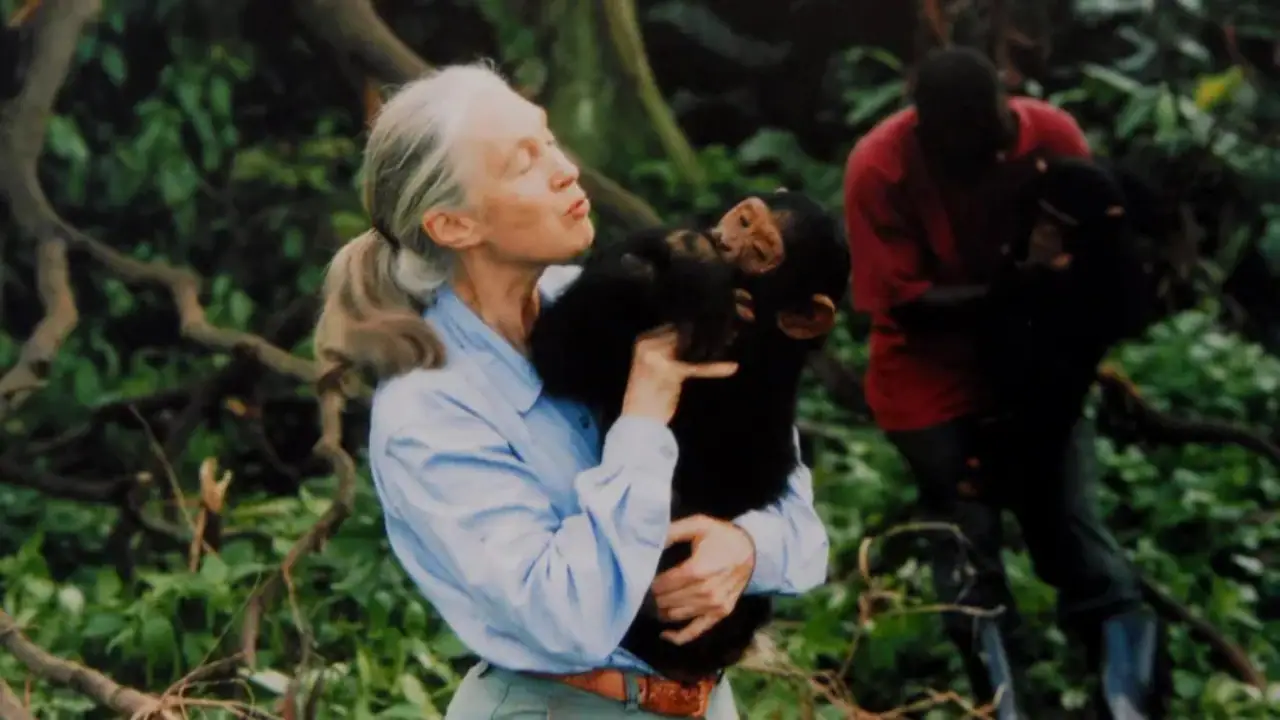
Dame Jane Goodall, one of the world’s most influential primatologists and conservationists, has passed away at the age of 91. Her groundbreaking research on chimpanzees and her lifelong dedication to wildlife protection changed how humanity understands its closest primate relatives.
A Life Dedicated to Animals
Jane Goodall was more than a scientist; she was a serene yet powerful force of nature. Even in her later years, she remained deeply committed to raising awareness about biodiversity loss, climate change, and conservation. When I last interviewed her, she radiated calm while warning of the great extinction crisis threatening our planet.
Always by her side was her toy monkey, Mr H, a gift she had carried with her for nearly 30 years. At 90, she was still travelling the globe, spreading her message of hope and action for the natural world.
Pioneering Discoveries in Chimpanzee Behavior
In 1960, at the Gombe Stream National Park in Tanzania, Goodall made a revolutionary discovery that changed science forever. She observed a chimpanzee stripping a twig of its leaves and using it to extract termites from a nest—clear evidence of tool use in animals, something once believed to be unique to humans.
This observation shook the scientific community and redefined the boundaries between humans and other primates. Her work also revealed that chimpanzees build strong family bonds, show emotions, and even wage territorial wars.
Breaking Barriers in Science
Jane Goodall’s methods were unconventional for her time. She named the chimpanzees she studied, referred to them as “friends,” and formed personal bonds with them. While many in the male-dominated scientific establishment criticized her approach, her mentor Louis Leakey believed it was her openness that made her discoveries possible.
Despite facing sexism and skepticism, Goodall persisted, paving the way for a more empathetic and holistic approach to studying animals.
A Global Conservation Leader
Beyond her scientific achievements, Jane Goodall became a leading voice in conservation. Through the Jane Goodall Institute, she promoted tree planting, habitat restoration, and youth-led environmental initiatives worldwide. In her final years, she continued urging people to act against climate change and biodiversity loss.
In 2024, she emphasized: “We still have a window of time to slow down climate change and loss of biodiversity. But it’s a window that’s closing.”
Tributes from the Scientific Community
Leaders in science and conservation have described her death as a monumental loss. Adrian Smith, president of the Royal Society, called her “an amazing scientist who inspired people to see the natural world in a new way.” Roger Highfield of the Science Museum said she “challenged human exceptionalism and changed how we think about other species and ourselves.”
Professor Cat Hobaiter of the University of St Andrews, who studied chimpanzee communication for over 15 years, noted: “Jane gave up what she loved—time with chimpanzees—to travel the world and inspire others. She’d tell us not to mourn, but to act.”
Her Enduring Legacy
Jane Goodall’s life reminds us of the power of curiosity, patience, and compassion in understanding the natural world. Her discoveries about chimpanzees not only transformed science but also deepened humanity’s sense of connection to nature.
Her legacy is clear: protecting wildlife and fighting for the survival of our planet is a responsibility we all share. As Prof Hobaiter said, “We all have a lot to do to make sure we are not the last generation to live alongside wild chimpanzees.”
Also Read: Green Iguanas in Florida: A Deadly Invader in a Beautiful State

